
A buyer’s market doesn’t mean every home is a bargain or every offer can wait. When navigating a buyer's market in Dartmouth, look for signs that housing supply exceeds demand: more homes to choose from and less competition among buyers. Conditions can shift, and desirable homes may still sell quickly.
It’s reasonable to wonder whether waiting could bring better options or whether the right home might sell while you weigh the market. Judge conditions alongside your priorities, budget and readiness, rather than treating “buyer’s market” as a signal to rush or hold out indefinitely.
Learn how to recognize market signals, assess whether conditions could improve your negotiating position, and decide when a Dartmouth home is worth pursuing. Compare properties, weigh inspection findings and keep your next move grounded in what matters to you.
Key Takeaways
Look for supply exceeding demand and more homes to choose from; a buyer’s market is about the balance between buyers and sellers, not a guarantee of a bargain.
Track how available listings and competition change over time, and stay ready to act when a suitable Dartmouth home appears.
Compare similar properties and weigh location, condition and your priorities before deciding whether an asking price represents value.
Use inspection findings to identify issues that may inform your offer or negotiations, while distinguishing cosmetic work from more serious concerns.
A Home Evaluation can help you assess a property’s value as you consider your next step.
1. Identifying market conditions
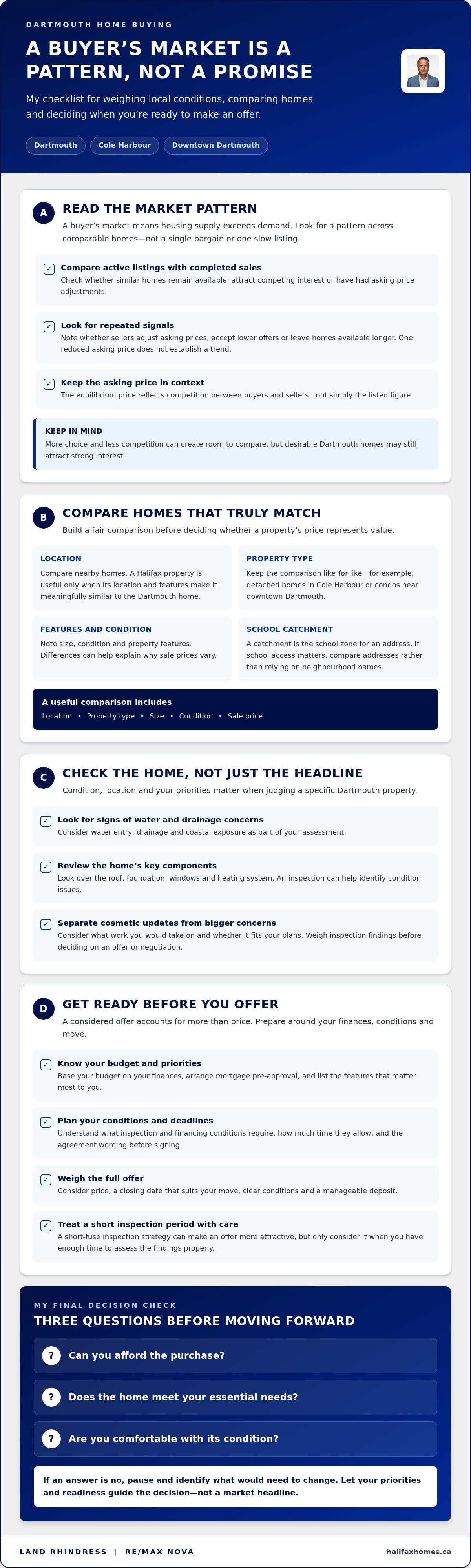
Start by comparing Dartmouth listings with completed sales of similar homes. A buyer’s market occurs when housing supply exceeds demand, often bringing more choice and less competition. One reduced asking price or a home that stays available does not establish a trend. Compare the same property type and nearby area, such as detached homes in Cole Harbour or condos near downtown Dartmouth.
For each comparison, note the location, property type, size, condition and sale price. Then check whether similar homes remain available, attract competing interest or have had asking-price adjustments. A Halifax home is a useful comparison only when its features and location make it meaningfully similar to the Dartmouth property. This keeps broad regional averages from obscuring differences between individual homes.
School location can also shape your shortlist. A catchment is the school zone that determines which school children in a neighbourhood attend. Compare the catchment for each Dartmouth address, then prioritize homes within the same catchment if school access matters to your household. Nearby properties may fall in different catchments, so compare addresses rather than relying on neighbourhood names alone.
Which Dartmouth neighbourhoods offer good value, and how do prices compare with Halifax? Value depends on the property type, condition and location. Compare similar homes in Cole Harbour or downtown Dartmouth with comparable Halifax properties instead of assuming one area is cheaper.
What are recent comparable sale prices in Dartmouth neighbourhoods? Compare completed sales of similar homes in the specific area you’re considering, including Cole Harbour or downtown Dartmouth. Differences in property features and condition can help explain sale-price variations.
What closing costs and taxes should homebuyers budget for in Nova Scotia? Include the applicable deed transfer tax and other purchase costs alongside the offer price. The total depends on the property and applicable charges.
What risks should buyers check for in Dartmouth homes, including flood, coastal and property condition issues? Look for signs of water entry, drainage concerns and coastal exposure, then review the roof, foundation, windows and heating system. An inspection can help identify condition issues that may affect your assessment of the property.
2. Timing a home purchase
I don’t recommend waiting for a perfect moment based only on market headlines. Even in a buyer’s market, a desirable Dartmouth home can sell quickly. Weigh the home’s fit, your finances and your readiness to make a considered offer. Those personal factors are a more useful timing guide than trying to predict every economic shift.
For a Nova Scotia purchase, plan how you’ll handle inspection and financing conditions before making an offer. Set workable deadlines that leave time to review the home and your financing, and read the agreement wording carefully before signing. Understand what each condition requires and when it must be addressed.
First-time buyers can make the process easier to manage by following clear steps. Begin with a budget based on your finances, then arrange mortgage pre-approval. List your essential features, choose Dartmouth areas that suit your daily routine, and view homes that meet those priorities. Before making an offer, review the property’s condition and decide which terms matter to you.
Preparation also helps you avoid making decisions under pressure. Before a viewing, write down questions about the layout, maintenance and any visible work. Afterward, record what you learned while the details are fresh. If a home needs cosmetic updates, for example, identify which changes you’d take on and whether they fit your plans.
When you’re ready to make an offer, consider more than the price. A closing date that suits your move, clear conditions and a manageable deposit all affect how workable an offer is. Sellers may be more willing to negotiate when a property has been listed longer, but terms should still reflect your needs and the home’s merits.
Inspection timing deserves care. A short-fuse inspection strategy means committing to a very quick inspection period to make an offer more attractive while still protecting yourself. Consider that approach only if the inspection arrangements and your schedule leave enough time to assess the findings properly. Speed is no substitute for understanding the home.
My final decision check is simple: can you afford the purchase, does the home meet your essential needs, and are you comfortable with its condition? If one answer is no, pause and identify what would need to change. If all three are yes, you can move forward for reasons that make sense to you, not because a headline says it’s time.
3. What defines a buyer’s market
I describe a buyer’s market as a period when the supply of homes exceeds buyer demand. That can give you more properties to compare and reduce competition, but it doesn’t make every Dartmouth home a bargain. Desirable properties can still attract strong interest, while homes needing work may leave more room to discuss price or terms.
When I assess the market, I look for a pattern rather than relying on one listing. I compare active homes with completed sales of similar properties, then note whether sellers adjust asking prices, accept lower offers or leave homes available longer. If one Dartmouth property stays on the market while comparable homes sell, I consider its condition, location and pricing. Those details can help explain the difference.
I also consider how buyers and sellers compete. Buyers compete with other buyers for a property, while sellers compete with other sellers for offers. When supply exceeds demand, a seller may have fewer interested buyers to choose from. The equilibrium price reflects that competition, not simply the asking price. That distinction helps me assess the context behind a listed figure.
When you ask me about an opening offer, I recommend comparing recent sales of similar Dartmouth homes, then weighing condition, asking price and apparent competition. I’d base the offer on those comparisons and negotiate price or terms around specific differences, such as required repairs or a closing date that can be flexible.
I also look beyond the price. In a buyer’s market, a seller may be more open to discussing terms or accepting a lower price. Possible negotiation points can include contributing to closing costs, including a home warranty or buying down a buyer’s mortgage rate. These are possibilities to discuss, not standard features of every sale.
When a home needs work, I separate cosmetic updates from more serious condition concerns. A property needing paint or minor updates may suit a buyer prepared to take on those projects. If an inspection identifies more serious issues, I’d review the findings carefully. They may support a discussion about a price reduction or seller-paid repairs.
For example, I might compare two similar Dartmouth homes: one is move-in ready, while the other needs cosmetic updates. If the second has been available longer, I’d consider whether its asking price reflects the work involved. A buyer’s market can improve your choices and negotiating position, but I’d still judge the home against its value to you and your budget.
I consider HRM market inventory, the supply of homes for sale, alongside completed sales and current competition. Revisit those signals as you search. If suitable listings grow and sellers become more flexible, you may have more room to negotiate. If a desirable home draws competing interest, I can help you make a timely, considered decision.
4. What are current home prices and market trends in Dartmouth, Nova Scotia?
A useful Dartmouth price trend comes from comparing completed sales of similar homes, not asking prices alone. Compare the same property type and nearby area, then account for size, condition, renovations and features. A condo in downtown Dartmouth and a detached home in Cole Harbour belong in separate comparisons. This keeps one high or low sale from distorting your view.
For a practical comparison, select recently sold properties that match the home you’re considering. Check whether each sale had similar living space, age, lot, parking and condition. Then compare its sale price with the current asking price. If the homes differ, note why: a renovated kitchen or substantial repair needs can explain a gap better than a neighbourhood label.
Across Dartmouth, prices can vary between areas such as Woodlawn, Cole Harbour, Portland Estates and downtown. Those names alone don’t establish which is cheaper: property type, condition and location within each area all affect value. Compare homes that meet your needs, including access to municipal services, commute routes and the school catchment relevant to your household.
To read changing conditions, track three signals together: available listings, completed sales and seller price adjustments. If similar homes remain available longer or sellers reduce asking prices, buyers may have more room to negotiate. If a well-priced property attracts strong interest, buyer-friendly conditions across the market may not apply to that specific home.
Another useful check is the relationship between asking and sold prices for comparable Dartmouth properties. A gap can reflect the seller’s expectations, the home’s condition or competition at the time of sale. It doesn’t automatically mean a home is overpriced. Consider inspection findings and comparable sales before deciding whether to make a lower offer or include repair-related terms.
Market movement also depends on the balance between supply and demand. More available homes can give buyers more choice, including the option to compare nearby neighbourhoods. Yet desirable homes can still sell quickly. Review listings and sales relevant to your preferred property type, rather than assuming every Dartmouth segment moves alike.
For your own price check, write down the property type, area, condition and key features, then compare like with like. Revisit the comparison when new sales appear or asking prices change. This gives you a grounded way to judge whether a Dartmouth home fits its market, without treating a headline or a single sale as the whole story.
Land Rhindress: Home Evaluation
Land Rhindress’s Home Evaluation can help you assess a Dartmouth property’s value against comparable homes and current market conditions. It’s useful when weighing an asking price, preparing an offer or comparing a home that needs updates with one in move-in condition. A grounded evaluation gives you another perspective alongside recent comparable sales and the property’s features.
Use it when you’ve narrowed your search and want to make a more informed decision about value. I can help you consider the details that shape the comparison, including location, property type and condition.
For support with your Dartmouth home search, contact Land Rhindress or visit halifaxhomes.ca.
Make your next move with a clear plan
The right time to act is personal. Your priorities, finances and plans for your next home matter as much as the market’s direction. When navigating a buyer's market in Dartmouth, focus on a decision that works for your life rather than waiting for perfect conditions.
If you’re still exploring, my Home Finder can focus your search on the places and features that matter to you. If your move also involves selling, my Marketing Strategy can help shape that part of the transition. I can also use a Home Evaluation to help you consider a property’s value as you weigh your options.
When you’re ready to talk through your next step, contact Land Rhindress to discuss your move. A thoughtful plan can help you move forward with confidence, one decision at a time.
Frequently Asked Questions
Can market conditions change quickly?
Yes. The balance between listings and buyer interest can shift, and an individual home’s prospects can change as new properties enter the market or competing offers emerge. For example, a Dartmouth buyer comparing homes this week may face different choices after a well-matched listing appears. Reassess available homes and your priorities as you search, rather than relying on an earlier impression of market conditions.
How can you tell which market you’re in?
Compare recent activity for the type of home and Dartmouth area you’re targeting. Look at whether similar properties are attracting offers, adjusting asking prices or remaining available as alternatives appear. For a practical check, review a group of comparable listings together instead of drawing a conclusion from one property. A market can also feel different for detached homes than for condos, so keep property types separate.
Should I wait for a better market?
Wait if buying now would put pressure on your finances or force you to compromise on essential needs. When navigating a buyer's market in Dartmouth, decide what “better” means for you: a suitable home, manageable costs, a preferred location or more choice. Set those priorities before delaying. A future market may offer different conditions, but waiting alone can’t ensure that a particular home or combination of features will become available.
What is a buyer’s market?
A buyer’s market describes conditions where the supply of homes exceeds demand, giving buyers more choice and often reducing competition. That can create more opportunity to compare options and discuss offer terms. It doesn’t mean every seller will accept a lower offer or that every home is priced below its value. The balance can also differ between property types and parts of Dartmouth.
How long are homes taking to sell in Dartmouth, and how common are price reductions?
Selling time and price reductions vary with a home’s location, type, condition, asking price and buyer interest. Rather than applying one timeline or reduction rate to every Dartmouth property, compare homes similar to the one you’re considering. Note when listings change price or status, and whether comparable homes remain available. This gives you context for a specific opportunity without assuming every listing follows the same pattern.
How can buyers find and evaluate homes in Dartmouth's buyer's market?
Start with a focused search based on your preferred areas, property type and essential features. Land Rhindress’s Home Finder can help you find suitable listings, while a Home Evaluation can help you assess a property against comparable homes. When reviewing a candidate, record what matters to you, such as layout, condition and location, then compare those factors across your shortlist before deciding which homes merit a closer look.