
Selling a family home in Halifax or elsewhere in HRM can feel like saying goodbye to a whole chapter. You can ease the emotional toll of selling a family home by taking time to walk through each room, capture photos, or plan a farewell gathering. Children may feel especially unsettled, so give them space to talk about what they’ll miss and ways to feel involved in the move.
It’s natural to feel both sadness and excitement, even when selling is the right decision for your family. Those feelings can coexist: memories can remain meaningful while you make room for what comes next.
This article explains why children can feel deeply attached to a home, how to talk about the move and help them feel included, and how a simple closing ritual can bring a sense of closure. Small, thoughtful steps can make the transition feel more manageable for everyone.
Key Takeaways
Make room for mixed feelings by recognizing that sadness and excitement can exist side by side.
Preserve the home’s personal history with photos, a scrapbook, or a walk through rooms filled with memories.
Children, especially teenagers, may find a move frightening; listening to what they’ll miss can help them feel understood.
Create a simple farewell ritual, then give everyone time to adjust before focusing on the possibilities ahead.
Explain the move clearly and invite children to help with packing or imagine their new room to give them a sense of involvement.
1. Attachment to a family home and childhood memories
The emotional toll of selling a family home often comes from what each room represents, not just its walls and windows. A kitchen may bring back Sunday dinners, while a doorway marks a child’s first steps. Before preparing to sell, name the memories that matter most. You can feel ready to move and still grieve the life you built there.
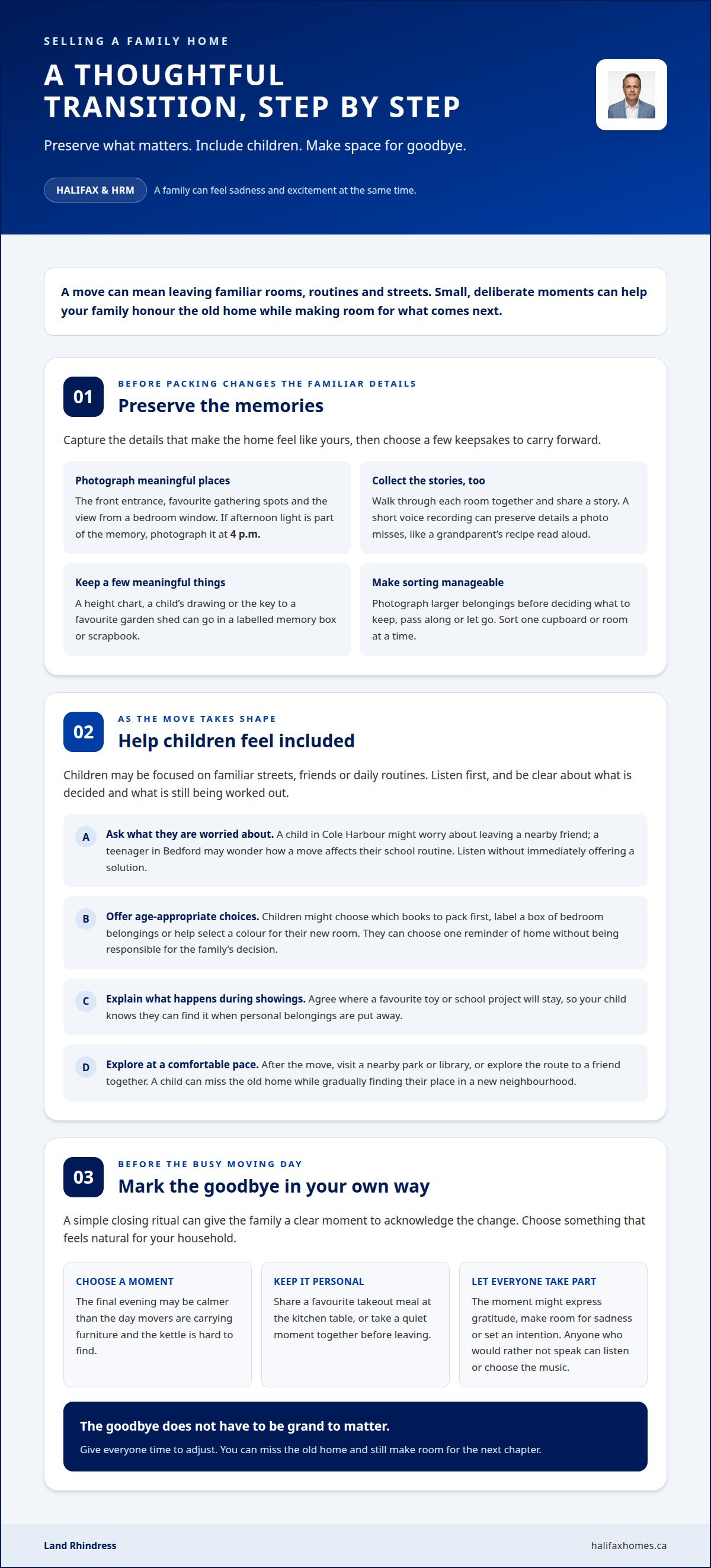
Start documenting the home before packing changes its familiar details. Take photos of the front entrance, favourite gathering spots, and the view from a bedroom window. If afternoon light is part of your family’s memory, photograph how it falls through the home at 4 p.m. Walk through each room together and share one story from that space. A short voice recording can preserve details that a photograph misses, such as a grandparent’s recipe read aloud in the kitchen.
Preserving memories doesn’t mean keeping every belonging. Choose a few meaningful items, such as a height chart, a child’s drawing, or the key to a favourite garden shed. Photograph larger pieces before deciding whether to keep, pass along, or let them go. A labelled memory box gives special objects a home, while a scrapbook can bring photos and handwritten stories together. Sort one cupboard or room at a time instead of trying to clear the whole house in a day.
In Canada, legal and tax considerations depend on who owns the home, how it was used, and who has authority to sell it. Before listing, clarify those details and identify any tax reporting obligations that apply to the owners’ circumstances. For an inherited property, establish who can make decisions and sign documents before sale preparations begin.
When siblings disagree about an inherited home, separate practical decisions from family memories first. Write down each person’s concerns, then agree on how decisions will be made, who is responsible for each task, and how updates will be shared. One sibling might organize records while another coordinates family discussions. Keeping the plan in writing can reduce misunderstandings and help everyone focus on the next step.
Sentimental value belongs in your family’s story, but an asking price should reflect the property’s features and current market evidence. Compare relevant homes by location, condition, size, and features rather than adding imagined value for a renovation or cherished memory. A kitchen that hosted generations of meals may be priceless to you, but buyers assess the home they can see and use.
A real estate agent can manage sale logistics, explain market information, and keep decisions moving while you focus on family conversations. Ask for a clear sequence of steps, from preparing the property to reviewing offers, so each decision has context. A written schedule and regular updates can make the process easier to follow. Then set aside time for a farewell gathering, goodbye letter, or final walk through the rooms that hold your family’s memories.
2. Children’s attachment to the family home
For a child, home can mean more than a building. It may be the bedroom where they read, the driveway where they learned to ride a bike, or the route to a friend’s house. Teenagers may feel especially overwhelmed or frightened by a move. In Halifax and across HRM, even a move between Dartmouth and Bedford can mean leaving familiar streets, nearby friends, and daily routines.
Notice which parts of the change concern your child. A child in Cole Harbour might worry about leaving a nearby friend, while a teenager in Bedford could focus on whether a move will change their school routine. Ask what they’re thinking about, then listen without immediately offering a solution. Their concerns can reveal which parts of home life feel most important to preserve.
Be specific about what you know and what is still being worked out. If your family is moving within HRM, explain what will change in familiar routines, such as how your child will get to activities or see friends. Don’t promise that everything will stay the same. Distinguishing settled plans from open questions helps children understand the move without relying on guesses.
Give children a practical role suited to their age and interests. They might choose which books to pack first, label a box of bedroom belongings, or help select a colour for their new room. A child who wants a small reminder of home can choose one meaningful item. These choices let them take part in the transition without making them responsible for the family’s decision.
Prepare children for what happens while the home is for sale. Explain that buyers may visit and that some personal belongings will be put away before a showing. Agree where a favourite toy or school project will stay, for example, and make sure your child knows they can find it. This can help a child in Dartmouth or Halifax understand why familiar rooms may look different during visits.
After the move, let children get to know their new surroundings at a comfortable pace. Explore a nearby park, library, or route to a friend together, whether your new home is in Sackville, Eastern Passage, or another HRM community. Invite your child to notice what feels familiar and what feels new. They can miss their old home while gradually finding their place in a different neighbourhood.
3. Creating a closing ritual and moving forward
A closing ritual can give your family a clear moment to mark the change, instead of letting moving day blur into boxes and errands. Choose an action that reflects how your household lives. A family in Dartmouth might share a favourite takeout meal at the kitchen table, while a household in Bedford may prefer a quiet moment together before leaving. Keep the ritual simple and personal.
Decide what you want the ritual to help each person do. It might offer a chance to express gratitude, acknowledge sadness, or set an intention for the next home. Keep its purpose clear so the moment doesn’t become another task to finish. If someone would rather not speak, they can take part by listening or choosing the music.
Choose a time when people can be present. The final evening before the move may work better than the busy day when movers are carrying furniture and someone is searching for the kettle. In Halifax or elsewhere in HRM, schedule the ritual around your moving arrangements rather than assuming a set timetable. A calm pause can make the farewell feel deliberate.
For an inherited home, shape the ritual around your family’s shared history. Siblings could each choose a song connected to the house and explain why it matters. If memories differ, there’s no need to settle on one official version of the past. Make room for each person’s perspective rather than turning a farewell into a debate about who remembers best.
Consider carrying a small tradition into your next home. If Saturday breakfasts were a fixture in the old house, keep that routine after moving to Sackville, Cole Harbour, or another HRM community. Familiar routines can provide continuity while your surroundings change. You might also mark the first week in the new home with a meal or activity your family already enjoys.
Moving forward doesn’t require forgetting the old address. Decide how you want to remember it, perhaps through a family recipe, a framed photograph, or a note kept with important documents. Choose something that fits your life now. As the practical demands of the move ease, let each person revisit memories in their own way and at their own pace.
4. How can parents explain a family home sale to children?
Choose a quiet moment before boxes appear to explain what’s happening. Keep the first conversation simple: “We’ve decided to sell this home, and our family is moving.” Add a reason children can understand, such as needing a different home or being closer to family. Share what you know about the next steps and be honest about what’s still undecided.
Make room for each child’s reaction without correcting it. One child may feel sad about leaving a bedroom, while another may worry about losing a familiar route to a friend’s house. Try saying, “I can see why you’ll miss that.” This acknowledges the feeling without asking a child to approve the sale or pretend to be happy about it.
Answer practical questions directly. If a child asks whether a favourite toy is moving, explain which belongings are coming and when packing begins. If they ask where they’ll sleep, describe the new room once you know the plan. Avoid saying nothing will change. Clear answers help children distinguish what’s decided from what the family is still working out.
Offer choices that give children a real role without making them responsible for the move. They could choose which books go into a labelled box, help decorate their new room, or select a few keepsakes to bring along. Let them decline, too. Packing can feel like a loss if it starts unexpectedly, so explain each task before asking for help.
A visit to the new neighbourhood can help children picture an unfamiliar place. Walk or drive past the new home, notice a nearby park, and point out places the family may use. If school arrangements are settled, explain the plan clearly. If they aren’t, say so plainly instead of guessing. Concrete details give children something useful to ask about.
Give children time to process the news before emphasizing positive possibilities. In a later conversation, you might ask what they’d like to explore near the new home, such as a playground or library. Don’t use those possibilities to dismiss sadness. A child can look forward to a new bedroom and still miss the old one.
Keep the conversation open as the sale progresses. Before a showing, explain that visitors will look through the home and agree where a child’s special belongings will stay. After an important update, such as accepting an offer or setting a moving date, gather the family and explain what happens next. Regular updates and invitations to ask questions help children follow each stage without carrying adult decisions on their own.
Land Rhindress: Home Evaluation
Land Rhindress’s Home Evaluation can help you understand your home’s market position as you consider selling. It offers a practical reference for separating likely market value from the memories attached to the property. That clarity can help you discuss next steps with your family and make informed decisions.
Consider a Home Evaluation when you’re weighing whether to sell, planning a move, or setting realistic expectations before a family conversation. A property’s location, condition, layout, and features all shape its market position. The evaluation can give you a grounded starting point without diminishing what the home means to your family.
If you’re ready to discuss your next step, contact Land Rhindress or visit HalifaxHomes.ca.
Carry your family’s story into what comes next
The emotional toll of selling a family home can’t be measured by the number of boxes packed. What matters is making space for memories while giving your family room to build new ones. Take the next step at a considered pace, with practical decisions guided by what your household needs now.
If you’re weighing a sale, I can help you understand the property’s market position through a Home Evaluation. My Home Finder can support your search for a next home, while a Marketing Strategy can guide how your current property is presented to buyers. Each offers a practical way to move from reflection towards a decision.
Whether you’re still considering the timing or ready to talk through a plan, I’m here to help you explore your options. Contact Land Rhindress today to start a conversation and take your next step with care.
Frequently Asked Questions
Why is selling a family home emotionally difficult?
Selling a family home can feel difficult because everyday routines become tied to important life events. A garage might recall repairing a bicycle with a parent, or a kitchen table might be where family decisions happened. The emotional toll of selling a family home can surface as you make practical choices about a place with personal meaning. In HRM, leaving familiar streets and neighbours can add another layer of change.
How does selling a longtime family home affect mental health and grief?
Leaving a longtime home can bring grief, uncertainty, or irritability, and people in one household may react differently. One person might feel ready to move while another struggles with the change. These feelings aren’t a diagnosis or a sign that selling is the wrong choice. If distress persists or makes daily responsibilities hard to manage, consider talking with a trusted support person or a counsellor.
How can families cope with the emotional stress of selling a home?
Reduce strain by making a shared plan for decisions and tasks. For example, assign one person to track sale paperwork and another to coordinate family updates, then set a regular time to review progress. Keep a short list of upcoming decisions instead of carrying every detail in your head. Protect time for ordinary routines, such as a family meal or a walk.
What practical steps help preserve memories before moving out?
Create a simple digital record alongside any keepsakes. Save selected images in clearly named folders, add brief captions identifying people or occasions, and record a voice note about a detail you might forget. You could also sketch a room layout or write down a family recipe associated with the house. Keeping these records together makes them easier to revisit after the move.
What are common emotional pitfalls when decluttering and staging a family home?
A common pitfall is treating every object as a test of loyalty to the home. Another is rushing to discard belongings during a stressful day and regretting the decision later. Agree on a sorting process first: set aside disputed items, give family members time to decide, and separate personal keepsakes from everyday clutter. Don’t expect the home to feel impersonal; preparing it for buyers needn’t erase its history.