Could the wall-mounted TV stay while the television itself goes? It’s the sort of detail that can turn a smooth handover into an awkward surprise. If you’re wondering what stays with the house when you sell NS, the answer often depends on whether an item is attached to the property and, just as importantly, what the written agreement says.
It’s reasonable to expect built-in features to remain and personal belongings to leave, but appliances, TV mounts and smart devices can sit in a grey area. As a Dartmouth-based agent with Land Rhindress, I help clients clarify these details before closing instead of relying on assumptions made during a showing.
In this guide, I’ll explain the usual distinction between fixtures and movable items, identify what buyers and sellers should discuss, and show how clear wording in the Agreement of Purchase and Sale can help prevent misunderstandings. You’ll also find practical reminders for the final walkthrough and handover, so everyone knows what should be there, what’s being taken and what needs to be removed.
Key Takeaways
For what stays with the house when you sell NS, rely on the signed agreement’s wording rather than assumptions about what’s usually included.
Sort household items into attached features, movable belongings and grey-area items that need clear written terms.
Make a room-by-room list of inclusions and exclusions before listing or making an offer to catch likely points of disagreement.
If an item becomes a point of dispute, compare the written terms and document any resolution before handover.
What stays with the house when you sell in Nova Scotia? Start with the agreement
The signed agreement’s specific wording is the practical starting point for understanding what stays with the house when you sell NS. A buyer may expect a particular item to be included, while the seller may see it as personal property they plan to take. Familiarity with a home doesn’t mean both parties have the same picture of what comes with it.
I encourage buyers and sellers to settle questions about items in writing before they become handover-day surprises. General conventions can help frame the discussion, but the wording agreed to for this specific sale deserves close attention.
Fixtures and chattels: the plain-language distinction
Fixtures are items attached to or incorporated into a property. Depending on the circumstances, examples might include a furnace, a fitted light fixture or built-in shelving. Chattels are movable belongings, such as freestanding furniture, and the parties can agree to include them in the sale. The distinction can help you identify questions to discuss, but it doesn’t decide every item by itself. Attachment, context and the agreement’s wording can all matter. For a general overview, see this legal definition of a fixture in property law.
A general convention is a starting point; an express term in the signed agreement records what these parties have agreed for this sale.
Why written inclusions and exclusions matter
Broad descriptions can leave room for different interpretations. A seller might read “light fixtures included” as referring to the installed fixtures, while a buyer may have a particular fitting in mind. Naming the item and its location makes the intended meaning clearer. The same care applies when the seller plans to remove something a buyer might reasonably expect to remain.
List items the parties have agreed will stay.
Identify items the seller will remove, especially if they are attached or built in.
Record exceptions in the offer or other agreed transaction documents, rather than relying on a conversation or an assumption.
If a question turns on legal interpretation, don’t treat a general explanation as a final answer. Consider the applicable wording in the context of current Nova Scotia transaction documents. Clear, specific terms give both sides a more reliable reference as they prepare for the next steps.
Fixtures, appliances, and outdoor items: how to assess what may remain
When an item could be interpreted in more than one way, consider how it is installed, whether it can be moved and what the agreement says. This practical check can help buyers and sellers work through questions about what stays with the house when you sell NS. The examples below are prompts for discussion, not automatic rules.
Inside the home: appliances, fixtures, and built-ins
A built-in appliance and a freestanding refrigerator may look equally essential in a kitchen, but they’re different kinds of items to discuss. Installation can shape how the parties view them without settling the question on its own. The same goes for lighting: specify whether a particular fixture stays, especially if the seller intends to replace it. Built-in shelving and window coverings also deserve a clear description if either party has a specific expectation.
To avoid a “which one did we mean?” moment, identify an item by room or location. Add the model or condition when that helps distinguish it from similar items. A useful rule of thumb: Name the item in dispute; broad assumptions are no substitute for specific wording.
Outside the home: sheds, equipment, and landscaping
Outdoor features call for the same careful look. A shed, play structure or removable fixture may be viewed differently by buyer and seller depending on its installation and the terms they agree to. Permanent landscaping and movable planters can also prompt different expectations. Don’t assume that an item’s location outdoors answers the question; note any exception in the agreed documents.
For items with separate pieces, describe what the agreement covers. A buyer and seller might have different ideas about whether a shed includes its shelving or whether outdoor equipment includes its anchoring hardware. Naming the parts, where relevant, helps make the intended arrangement clearer before the property changes hands.
Before listing or making an offer: document inclusions and exclusions
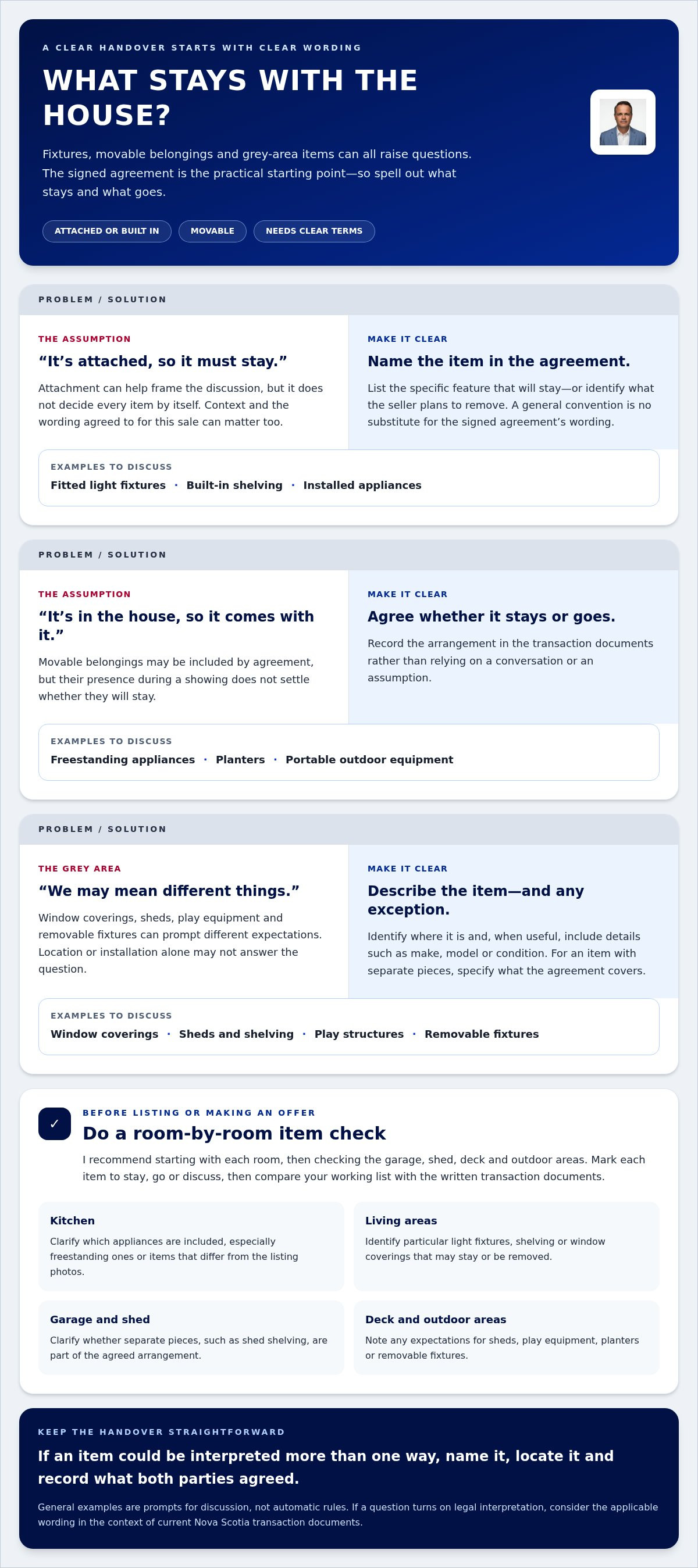
A little preparation before a listing goes live or an offer is made can save you from trying to interpret a photo at the last minute. I recommend a room-by-room inventory for items that could prompt different expectations. Treat it as a working list, then compare it with the written transaction documents as the sale progresses.
Build a clear item list before the property is marketed
Start with each room, then add the garage, shed, deck and other outdoor areas. For every item that may be questioned, record whether the seller plans to leave it, remove it or discuss it with the buyer. Include identifying details such as the room, location, make or model, and condition where they help distinguish one item from another.
Kitchen: Note which appliances are being offered, especially if some are freestanding or differ from what appears in the listing photos.
Living areas: Identify any particular light fixture, shelving unit or window covering that may be included or removed.
Outdoor areas: Record plans for items such as a shed, play equipment or movable planters.
Listing descriptions and photographs help buyers understand what they’re viewing and may prompt useful questions. But a photo can’t reliably establish whether a particular item is included. Use the written offer and agreed transaction documents to record the parties’ decisions.
Review the terms before the sale moves toward closing
Follow this process from preparation to handover:
1. Prepare the inventory. As the seller, flag items you intend to remove or are willing to include by agreement. As the buyer, note anything you expect to remain and raise it before making an offer.
2. Compare the wording. Review the item list against the offer and signed transaction documents. If a description conflicts with what either party understood, raise the question early and record any agreed change in writing.
3. Check the property. During the buyer’s last visit, compare the home with the agreed inclusions. My final walkthrough checklist for buyers in Halifax can help you organize that visit.
I’m Land Rhindress with RE/MAX Nova. When you’re preparing a Halifax-area sale, reviewing inclusions and exclusions is one useful part of your planning. Learn more about my real estate services.
From offer to handover: resolve item questions before closing
An item question that surfaces late in the sale can feel bigger than the object itself. A calm, practical first step is to pause and review the written terms. Don’t rely on memory of a showing or conversation; find the specific wording that addresses the item, if there is one.
If an item is disputed or missing
Start by identifying exactly what’s at issue. Is it a particular appliance, a light fixture or another item described in the agreement? Next, locate the relevant written term and compare it with what’s currently at the property. A focused discussion about the wording and the facts can help both sides understand where their expectations differ.
If the parties agree on a resolution, record it in writing through the appropriate transaction documents. A verbal understanding may be remembered differently later, so don’t treat a conversation as a substitute for documenting the decision. This is practical transaction guidance, not legal advice. The legal effect of particular wording depends on the circumstances and should be considered against current Nova Scotia documents.
Make the handover easier for both sides
Before the final visit, sellers can review the agreed inclusions and check that items meant to remain are still in place. Buyers can bring their written terms, look for the named items and note any specific concern while they’re at the property. If something doesn’t match, raise it promptly and keep the discussion tied to the documented agreement.
Pause: Avoid making a quick assumption about who is right.
Compare: Locate the exact item and relevant written wording.
Clarify: Discuss the difference using the agreed terms and observable facts.
Document: Record any resolution in writing rather than relying on a verbal understanding.
These steps can help keep an item disagreement from becoming a broader misunderstanding. They don’t determine legal rights or remedies, which depend on the agreement and applicable circumstances. For transaction-specific legal advice, consult a lawyer.
If you’re preparing to sell in Halifax or nearby, review your sale plans with Land Rhindress and keep the details clear from offer to handover.
Set your sale up for a smoother handover
Before your next step, decide which household items could prompt questions and make a note of what you want to happen with each one. That preparation gives you a clearer starting point for conversations with the other party and helps keep your plans aligned as the sale moves forward.
If you’re still weighing what stays with the house when you sell NS, focus on the item that feels least certain. Identify it, review the agreed wording and resolve any difference before handover. I bring more than 20 years of personal and commercial real estate investment experience to helping clients prepare for property decisions across HRM communities, including Halifax, Dartmouth, Bedford, Fall River, Sackville, Westwood Hills, Tantallon, Spryfield, Beaverbank, Eastern Passage, the Eastern Shore, Porters Lake, Cole Harbour and Lower Sackville.
As a RE/MAX Nova agent, I help clients plan sales and evaluate homes across the Halifax Regional Municipality. Contact Land Rhindress to discuss your Halifax-area sale and home evaluation, and take your next step with a clear plan.
Frequently Asked Questions
Can a seller take smart-home devices when selling a house in Nova Scotia?
It depends on the written agreement and how the parties describe the equipment. A removable smart speaker or plug may be viewed differently from a thermostat, doorbell or hub connected to the home’s systems, but that isn’t a legal ruling. Identify each device and any related accessories, such as a hub or mounting plate, in the transaction documents. For legal interpretation, refer to current Nova Scotia documents.
What happens if the seller leaves belongings behind after closing?
There isn’t a universal outcome to rely on if belongings remain after closing. To reduce uncertainty, the parties can state in writing what the seller must remove and by when, including items in a basement, shed or garage. If something is left behind, record what it is and where it was found, then review the agreement before deciding on next steps. Avoid assuming a particular remedy applies.
Should garage door remotes and house keys stay with the property?
Keys and remotes are access items, not physical fixtures, so address them as part of the handover. List what the parties expect to be provided, such as house keys, garage door remotes, mailbox keys or entry fobs. If a keypad or smart lock is involved, note any agreed arrangements for access codes as well. This gives both sides a practical handover reference without assuming an unverified Nova Scotia requirement.
Are sellers expected to leave the house clean when they move out in Nova Scotia?
Don’t assume a universal cleaning standard or a particular condition unless the parties have agreed to it. Buyers and sellers can write down expectations about the property’s condition and the removal of belongings, including items in cupboards or storage areas. A preference for a tidy home may be a practical expectation; it isn’t automatically the same as a term in the transaction documents. Clear wording helps set expectations before move-out.
What should I do if the listing mentions an item but the offer does not?
Raise the discrepancy before proceeding, and don’t assume the listing description settles the item’s status. Marketing material helps describe a home, while signed transaction terms record what the parties have agreed. Point to the exact wording or photograph, identify the item and request clear language that both parties agree to in the transaction documents. If the issue turns on legal interpretation, consider it against current Nova Scotia documents.
Can a buyer request that the seller leave a particular item?
Yes, a buyer can raise a request during negotiations, but making the request doesn’t mean the seller has accepted it. Be precise: identify the item by room, description or model, and include related parts the buyer expects to receive. For example, a request for a wall-mounted television could specify whether it refers to the screen, mount or both. Record any agreed inclusion in the transaction documents.